
Forest People
Orangutans, a wooden boat, and a line of tourists pretending they were alone

Every year, Rani and I try to find a new way to celebrate our birthdays. As I’ve mentioned two weeks ago, we share the exact same birthday and wedding anniversary, which somehow makes the whole thing feel ceremonial — like we’re contractually obligated to mark the passage of time with something we’ve never done before.
This year, that meant Borneo.
A reddish-brown river. A slow boat. Orangutans somewhere upstream.
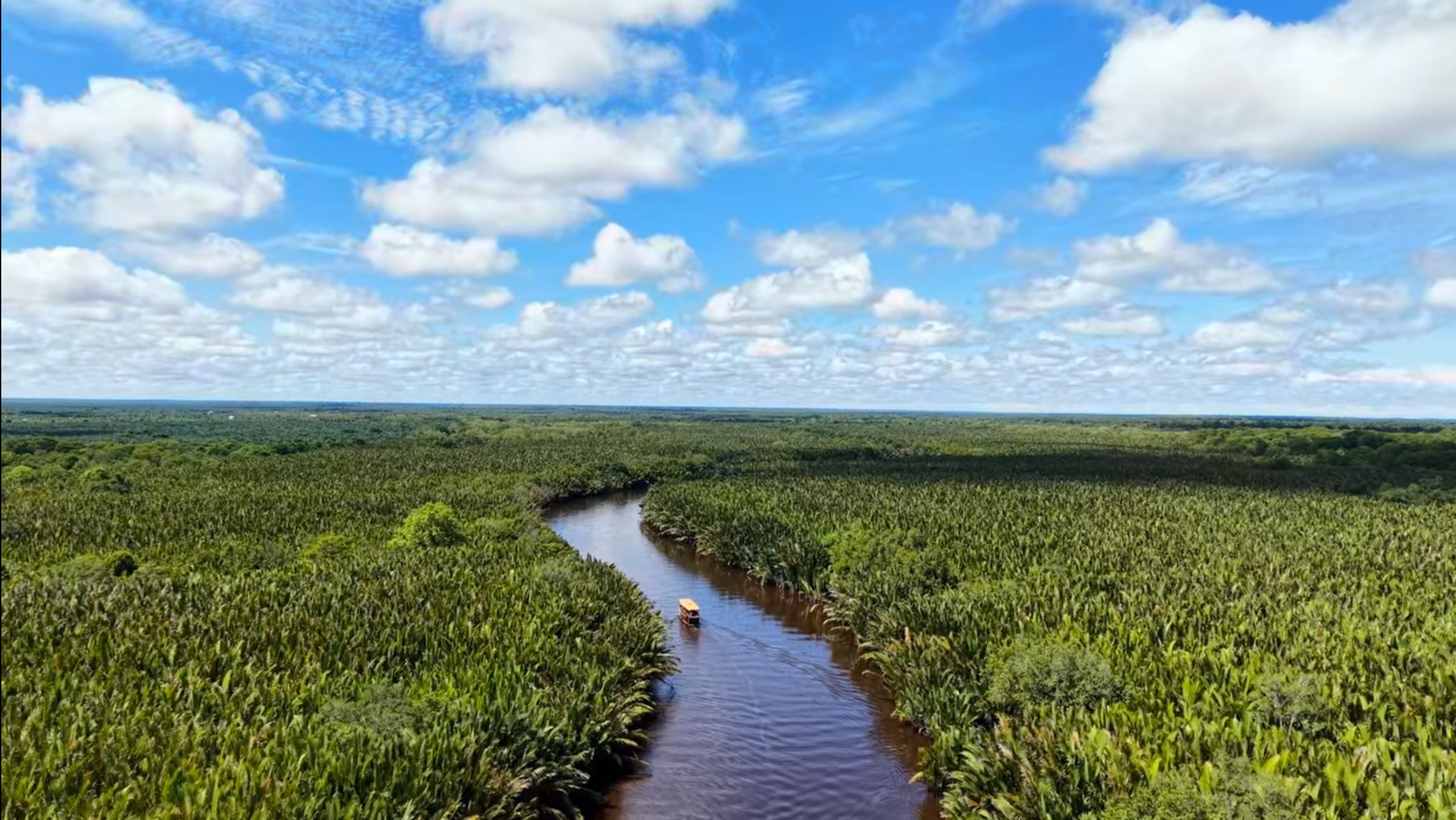
Indonesia is not short on strange and wonderful adventures, but one of the more famous is the river cruise through the jungle to the orangutan feeding stations. The whole area is a rehabilitation and conservation zone, built largely because the palm oil industry spent decades flattening the rainforest. The forest shrank. The orangutans got squeezed into smaller and smaller pockets. So conservation groups stepped in and started feeding them.
Our guide told us there are around 4,000 orangutans in the region and about twenty feeding stations. Tourists get to see three.
Each station has scheduled feeding times. Almost like showtimes.
The first one was astonishing.
We stood behind a rope while twenty or so orangutans came down out of the canopy. Some swung in with impossible grace. Others moved like old men getting out of bed. One by one they made their way to the platform where someone had laid out bananas and sweet potatoes.
The first to arrive was Roger.
Roger is the alpha. Forty-two years old, enormous, relaxed, and fully aware that everything here revolves around him. Nobody eats before Roger eats. Even among orangutans, there’s a hierarchy.
What got me wasn’t his power. It was how unbothered he was by us. He looked at the crowd the way a landlord looks at tenants who play music too loud — mildly irritated, completely unsurprised.
Our guide was named Darmin, which I only remembered because I kept calling him “Darwin” in my head. He’d been doing this for fifteen years and had mastered the rare skill of guiding without over-guiding. Some guides narrate nature so hard you never actually see it. Darmin knew when to talk and when to shut up.
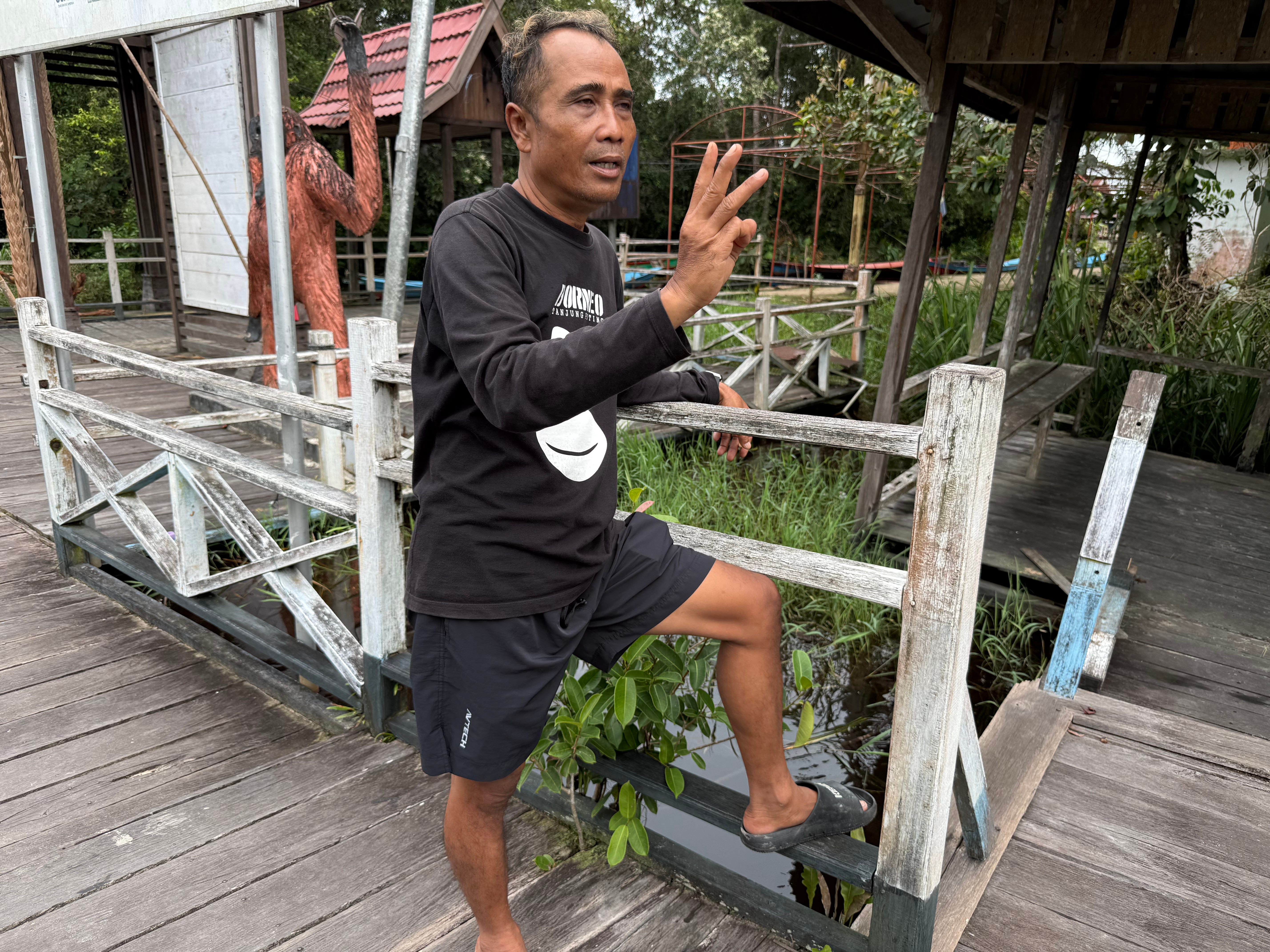
He gave us facts in small doses.
Humans and orangutans share about 97% of their DNA.
They live forty to fifty years.
Females give birth maybe once every five years.
The word orangutan comes from orang hutan — “forest person.”
After watching them for a while, that name feels about right.
They’re not human. But there’s something familiar in them that’s hard to shake. The slow movements. The stillness. The way they sit and stare into the middle distance like they’re thinking about unpaid taxes or a relationship that didn’t work out. One scratched itself lazily. Another looked deeply offended that someone had taken its spot near the fruit.
At some point it stopped feeling like watching wildlife and started feeling like crashing a family reunion.
But underneath the wonder, there was something else.
Something a little strange.
The whole thing runs on near-perfect choreography. Every boat takes the same route at almost the same time. Long wooden double-deckers — gorgeous in photos, apparently held together by optimism and wet plywood — drift up the river one behind the other. At each station they pile into floating traffic jams. Tourists file off, walk the same wooden paths, stand behind the same ropes, and wait for the same ritual.
It’s eco-tourism. It’s also weirdly industrial.
A wilderness experience with line management.
The story we like to tell ourselves about travel is that we’re out discovering something untouched. Something personal. Something that’s going to change us. The actual experience is usually less cinematic than that — a few hundred people funneled through the same path, taking nearly identical photos, each of us quietly casting ourselves as the explorer.
And yet.
Something real still happens anyway.
That’s the part I can’t resolve. Even inside all the machinery, the orangutans are still genuinely moving. Watching Roger come down out of the trees is breathtaking, even knowing one hundred people saw it yesterday and one hundred more will see it tomorrow.
I caught myself framing photos to cut out the crowds. Lone orangutan. Hanging on a vine. Silence. Pictures that made it look solitary and sacred.


Then I caught myself wanting the opposite shot.
The boats jammed together.
The crowd behind the rope.
The performance of wilderness, with all its seams showing.


Because the truth of the trip was sitting somewhere between those two pictures the whole time. The real moment and the manufactured one, right next to each other, refusing to cancel each other out.
Now do from the orangutans perspective.
I really enjoyed the video at the end. Impressive drone skills!