
Until I Can’t
Four thousand years, four hundred feet, and something I’m still trying to understand

“You are nervous?” he asks, before anyone has said they are. “Good. The first ones down, we were also nervous. We did not know if the rope was long enough.”
He smiles when he says it, and the smile is the thing I keep coming back to — not the practiced smile of a man repeating a script three times a day, but a man who still can’t quite believe he gets to do this for a living. He has done it hundreds of times. I spend the afternoon trying to understand why he keeps coming back.
We meet him inside a small hut at the base of the volcano, something between a ski lodge and a work station. Wet boots line the entrance. Harnesses hang from hooks. Helmets with mounted lights are stacked beside heavy jackets and climbing gear. Outside, black lava fields stretch toward the horizon under a gray Icelandic sky. He’s fit, somewhere in his sixties, weathered in that way where people seem carved by wind rather than aged by time.
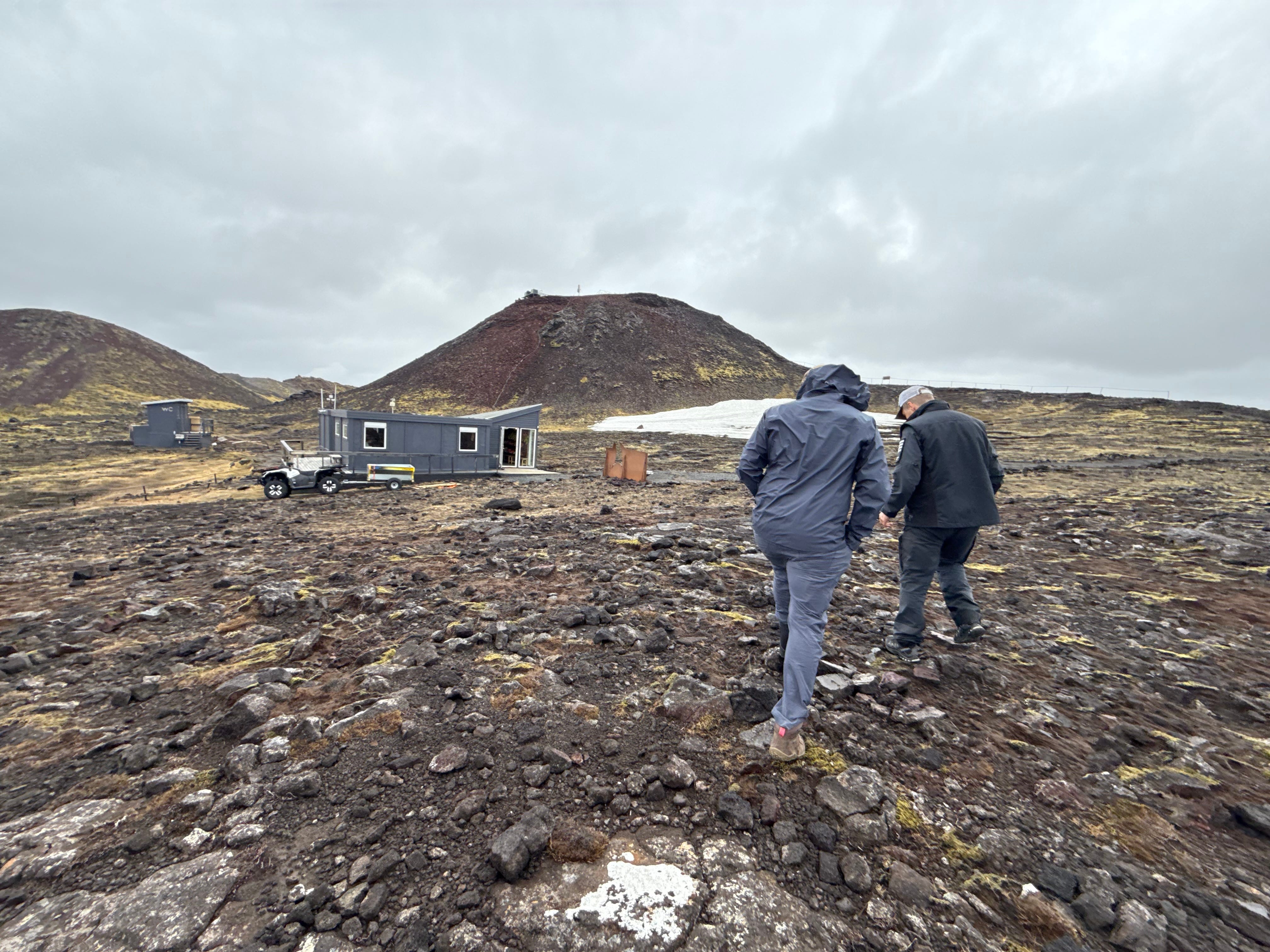
The volcano is called Þríhnúkagígur — the only one in the world where human beings can descend directly into the magma chamber itself. It last erupted roughly 4,000 years ago. Unlike almost every other volcano on earth, its chamber never collapsed inward afterward. The magma simply drained back into the earth, leaving a vast hollow space inside the mountain. Scientists still aren’t sure how. One volcanologist described it as though somebody had pulled the plug.
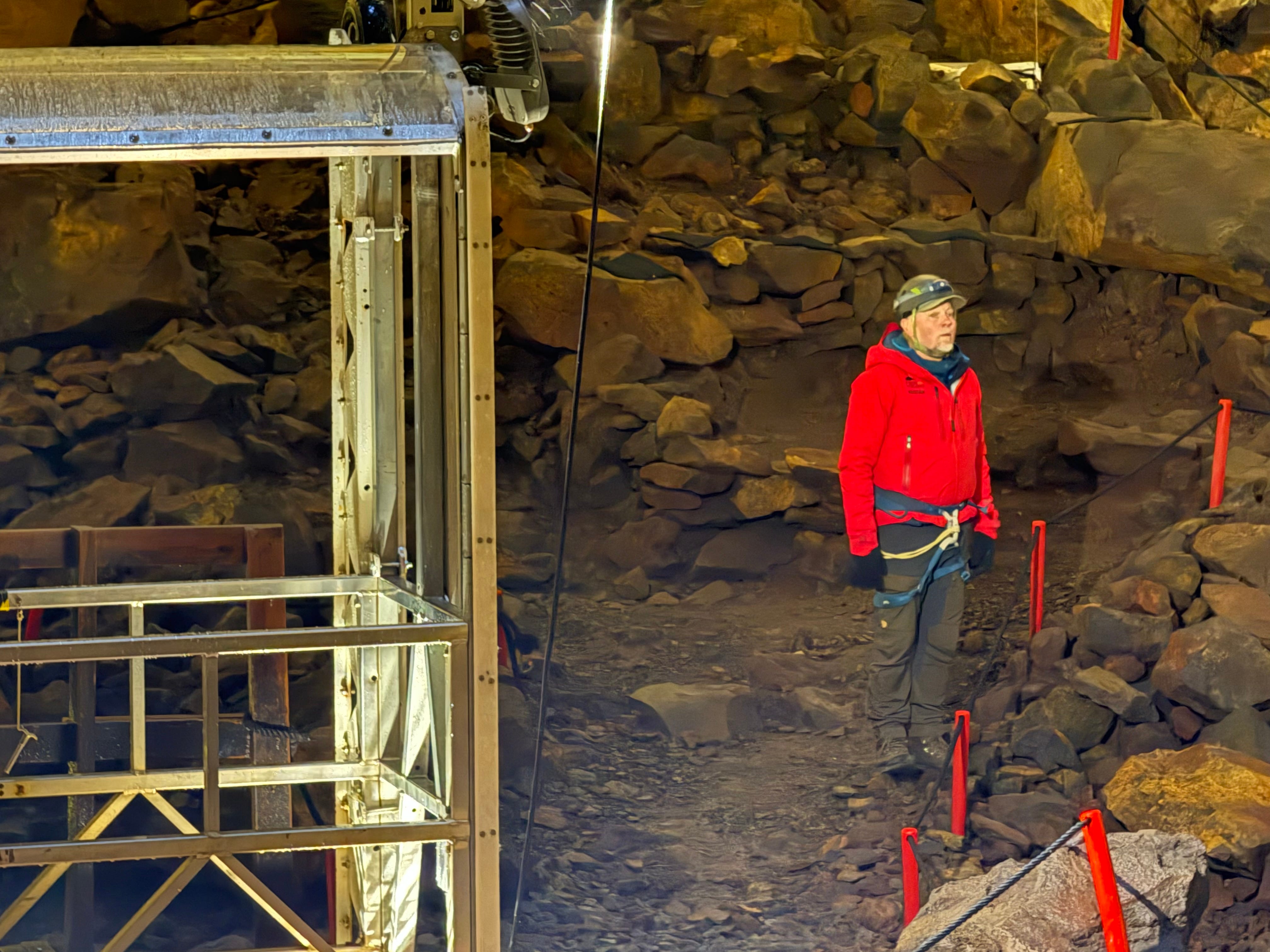
He was one of the first people ever lowered into it, decades ago, on one of the teams that mapped the chamber after Icelandic cave explorer Árni B. Stefánsson first entered it in 1974. No elevator. No safety system. No tourism. Just ropes hanging into the dark, and no certainty about how stable any of it was. He mentions this the way another man might mention fixing a fence.
Now the descent runs on what’s honestly a glorified window-washing machine. Every winter the whole lowering structure is pulled out and flown back by helicopter when the season reopens. Metal beams bolted into rock, rubber wheels scraping the narrowest parts of the shaft, an open cable lift over the darkness with a thin canopy overhead in case rocks fall. Nothing about it feels polished enough to let you forget you are being lowered into a volcano. Which, somehow, makes it better.
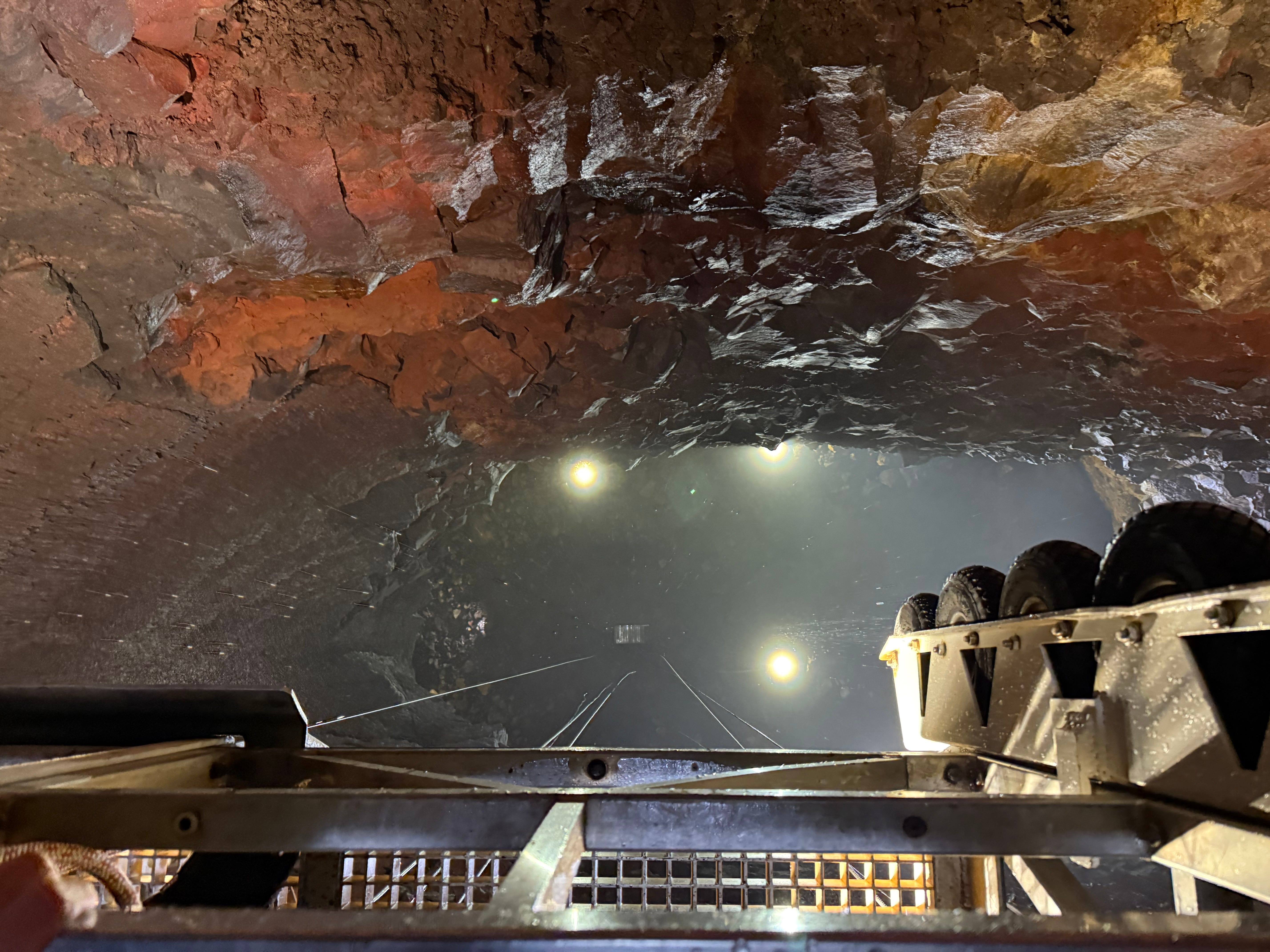
At the edge, Jason looks down into the shaft, laughs once, and goes quiet. He’s the friend you want on a trip like this — game for anything — and also the one doing the structural math on the cable while he laughs. Nobody fills the silence. We clip in. The platform takes our weight with a small lurch and starts down.
Mist inside the shaft makes the depth impossible to judge. Lights far below glow upward through the fog. The cage sways. Metal creaks. At certain points the walls come close enough to touch, and my hand moves to the rail before I’ve decided to reach for it. I say I hope it holds. Jason says he hopes there’s a redundancy. Then he tells me about the flying dinner — the kind where they hoist the whole table into the air on cables — and how one of the wires broke while he was up there. He’s somewhere else for a second, back in that moment. The irrational thoughts arrive on schedule — what if it erupts now, what if the cable goes — and then I remember the chamber has stood for four thousand years and these men have done this hundreds of times. It doesn’t help. Neither of us stops bracing the whole way down.
Nearly four hundred feet. And then the walls fall away on every side and we are standing inside it.
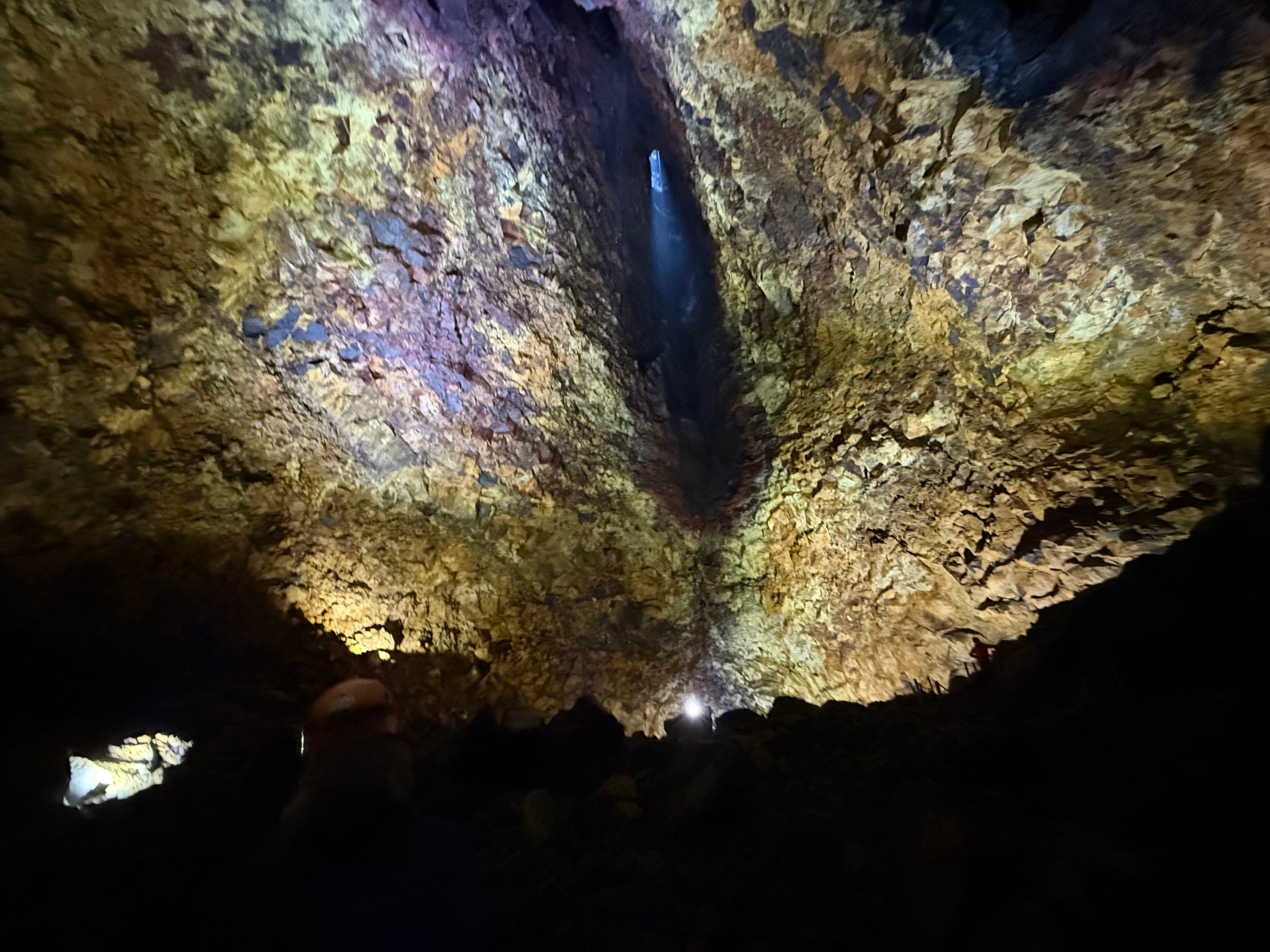
Nobody speaks. The first thing is the size — the way the dark opens out far past the reach of the lights, so the chamber feels less like a cave than the inside of a cathedral that burned and cooled and was forgotten. The air is colder and still, and it holds sound strangely; a dropped word travels and comes back changed. Then the colors arrive as my eyes adjust. Burnt orange and copper. Yellow sulfur bleeding down the rock. Indigo in the shadows, black volcanic streaks running through the stone like smoke that got trapped on its way out. It looks like standing inside the earth while it remembers being liquid.


He lets us stand in it a while. Then he starts pointing — this seam, that overhang, the place the rope used to hang. He has seen all of it thousands of times and he is still looking up while he speaks.
The risk has gone routine for him. The wonder hasn’t. That’s the part I can’t square, watching him study the rock he’s known for decades.
On the way up I ask how many more times he thinks he’ll go down. He shrugs, still looking past me at the colors. “Until I can’t,” he says.
What a wild adventure it must have been that first time! Well, and every other time since then, really. Thanks for sharing, Andy.
The floor is lava! Well not now but it was.
Wonderful video!